
The Effect of Changing pH and Partial Pressure on Hemoglobin-Oxygen Affinity in Ovis aries Blood using Oxygen Dissociation Curves
04-2022A lab report which analyzed the effect of changing pH and pO2 on oxygen saturation in Ovis aries blood. The two pH values were 6.8 and 7.2, being slightly acidic and basic respectively. The experiment found that a lower pH causes the initial hemoglobin saturation to be lower and the difference in P50 demonstrate the Bohr effect. The study concluded that the Bohr Effect is beneficial to the body because it affects the rate at which oxygen dissociates from hemoglobin, allowing for higher uptake during exercise. Data was calculated and presented in graphs using R.
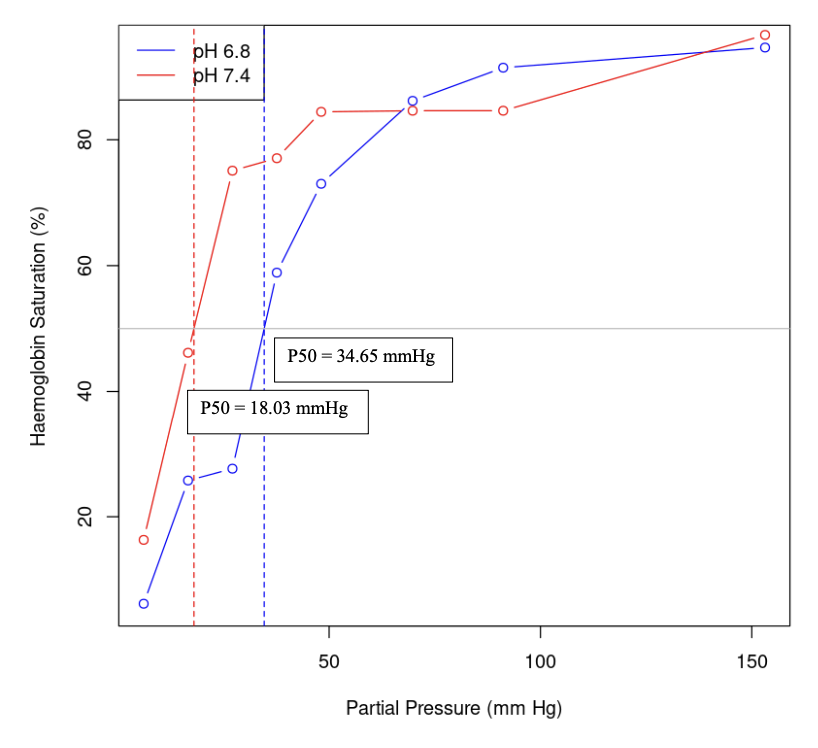
An oxygen dissociation curve displaying the independent variable of partial pressure of oxygen, measured in mmHg, and its effect on the dependent variable hemoglobin saturation, measured in percentage. The point of intersection of the dotted vertical line and the solid horizontal line is the P50 value. The data was collected using spectrophotometry, set at 625 nm, and a controlled vacuum to maintain a constant partial pressure.
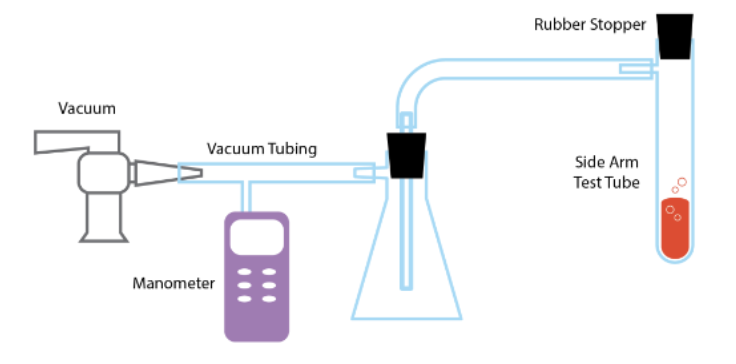
The experimental setup.
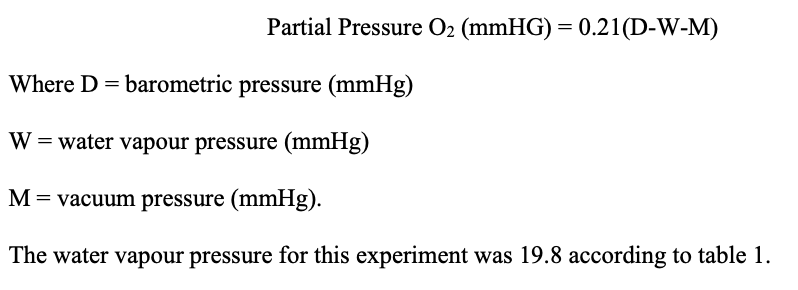
The equation for calculating the partial pressure of oxygen.

Temperature and water vapour pressure relationship.
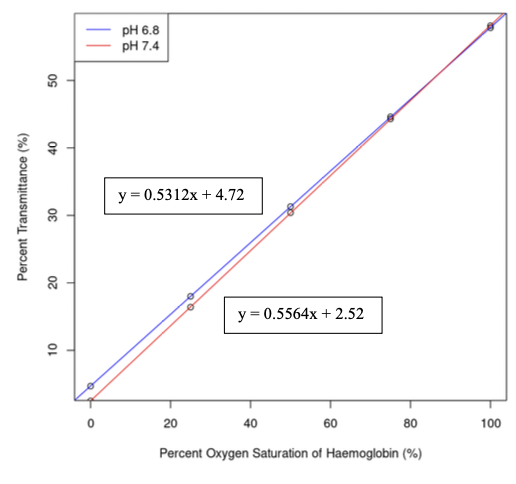
This oxygen standard curve displays the effect of the independent variable of hemoglobin saturation, measured in percentage, and its effect on the dependent variable of percent transmittance, measured in percentage. Data for this graph was collected using Ovis aries blood and lab equipment such as a spectrophotometer, set at 625 nm, which collected data from 18 trials in the experiment.